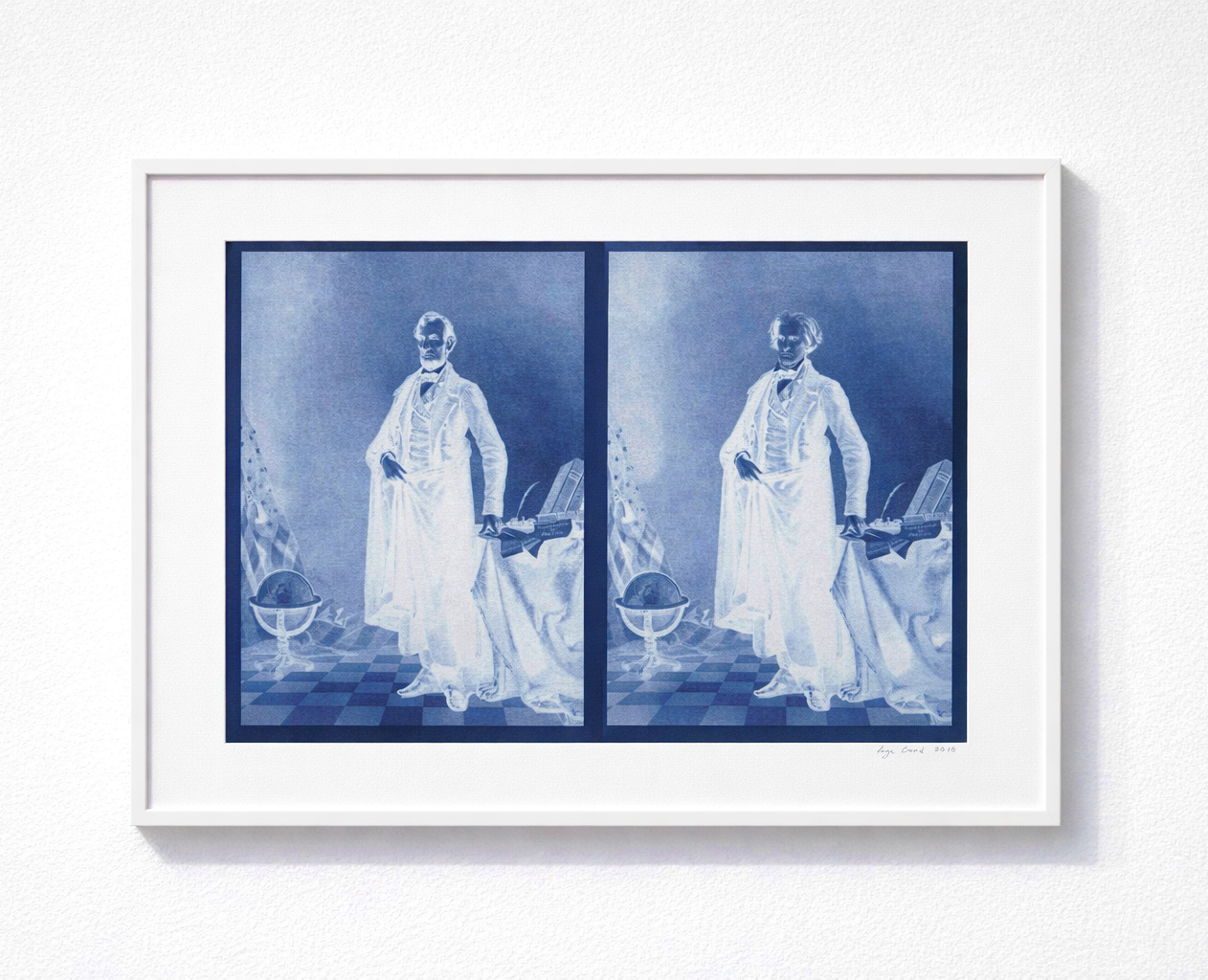
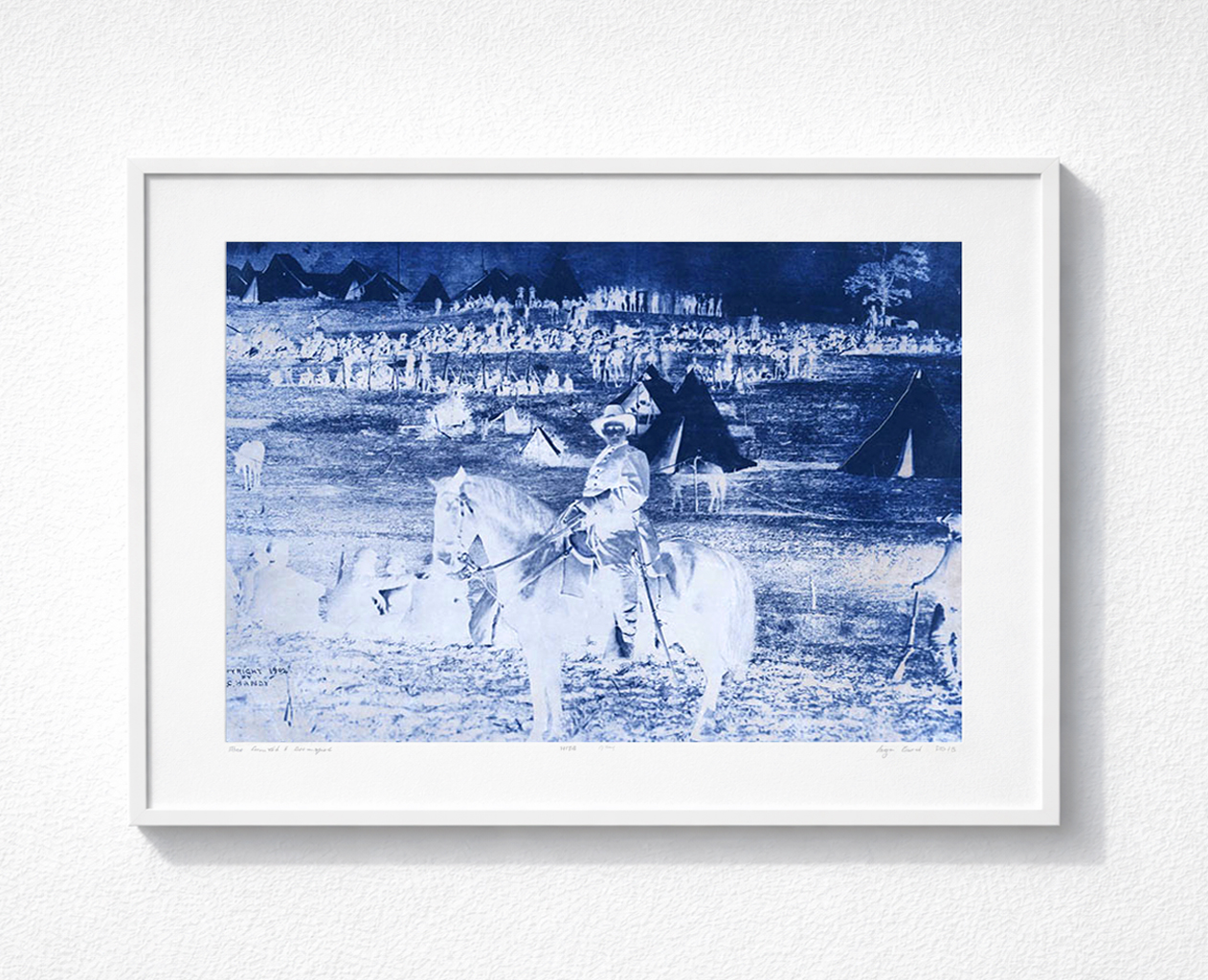
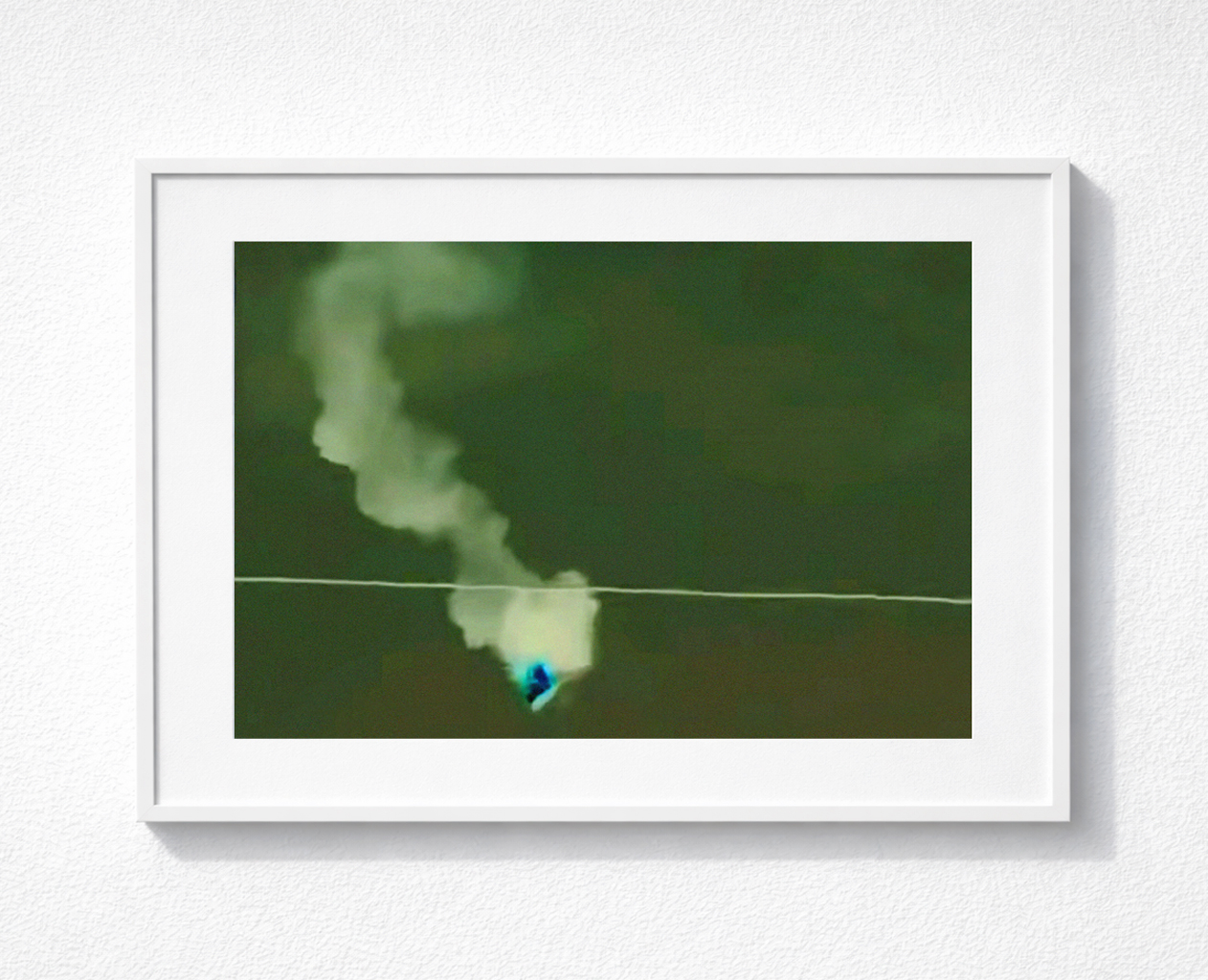
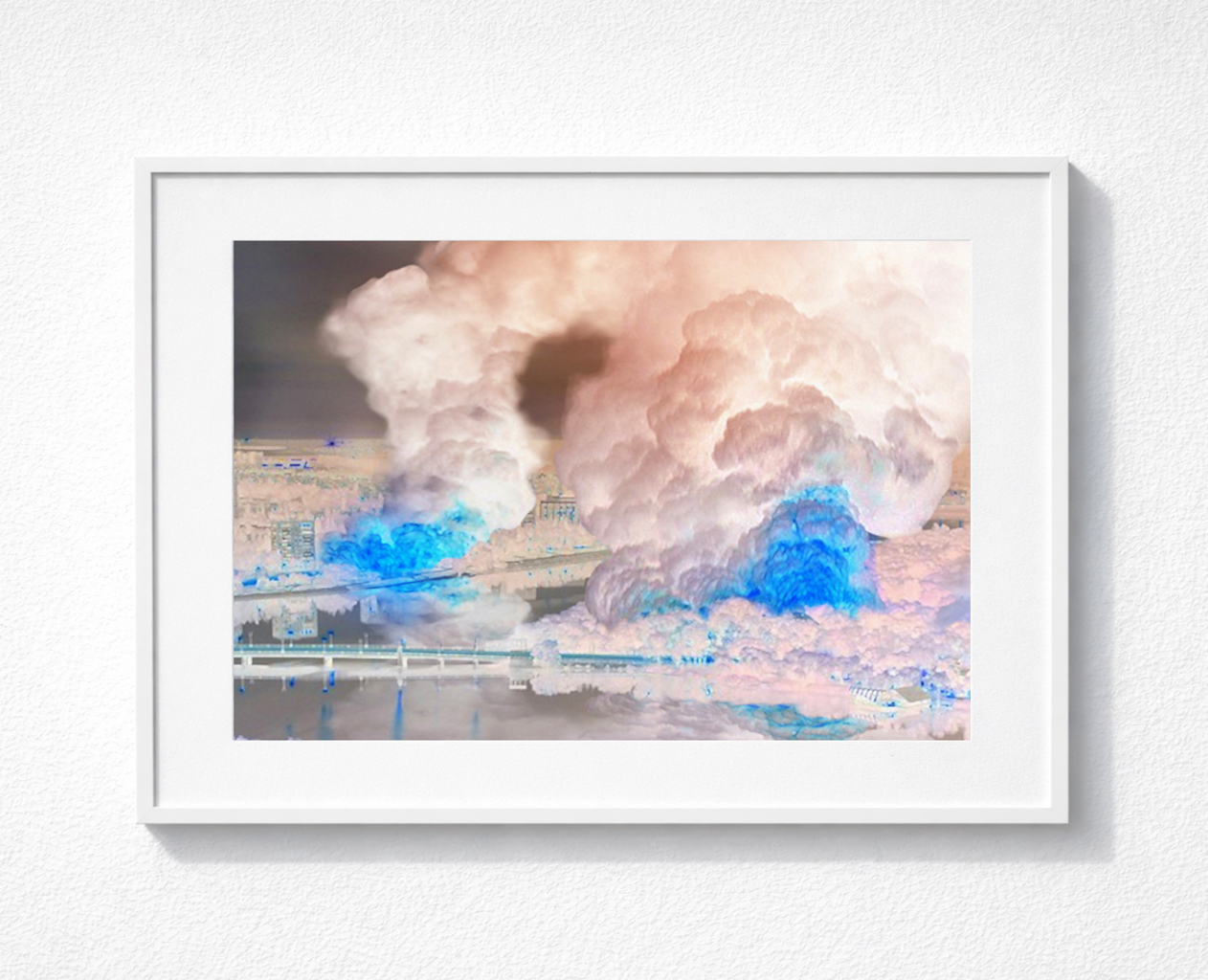
The misuse and manipulation of images is not a byproduct of our digital era; it has always been part of how images are used to gain and exercise power. From painted propaganda to early photographic composites, images have long been altered, recontextualized, and instrumentalized as tools of political technology.
Im interested in historical and contemporary images that have been misappropriated, doctored, or circulated in bad faith. Some manipulations are crude, others nearly invisible; all reveal how authority, emotion, and belief can be engineered through visual means. One of the most widely reproduced portraits of Abraham Lincoln, for example, is a composite: his head was collaged onto the body of another statesman. Similarly, an iconic Civil War photograph combines the head of General Ulysses S. Grant with the body of a different general, staged before a prisoner-of-war camp photographed elsewhere. More recently, state-run media have digitally added smoke to a famous panorama of a peaceful Ukrainian cityscape, fabricating a scene of conflict where none existed.
Each image is inverted into a photographic negative, framed, and hung on a wall as a way of removing it from circulation and asking it to be looked at rather than believed. Rather than correcting these images, the project treats them as artifacts of how images accrue power not through accuracy, but through spectacularization, framing, repetition, and the exhaustion of public attention.


